

Background to EnergyNet by Jonas Birgersson
EnergyNet is a concept developed by Swedish entrepreneur Jonas Birgersson, founder of ViaEuropa, inspired by the way the Internet transformed telecommunications. Birgersson argues that today's electricity grid is still built around a centralized, one-way model designed for the industrial age, while modern energy systems require flexibility, resilience, and local energy production.
The core idea of EnergyNet is to apply the principles of the Internet to electricity distribution. Instead of relying primarily on large centralized power plants, EnergyNet connects local energy communities, microgrids, batteries, solar generation, and intelligent software into a decentralized network where energy can be produced, stored, shared, and managed locally.
The vision emerged from Birgersson's broader ambition to create an "Energy Society" where abundant, affordable, clean electricity supports economic growth, energy security, and sustainability. Early implementations are being explored in Lund, Sweden, particularly in the Brunnshög district, which serves as a real-world demonstration of the concept.
In simple terms, EnergyNet aims to make electricity networks work more like the Internet: decentralized, intelligent, resilient, and capable of supporting large-scale electrification at lower cost.
Current EnergyNet Projects in Brunnshög and Pottugnen
Brunnshög, Lund: The First EnergyNet Demonstrator
Pottugnen (Spjället/Pottugnen), Lund: The First Large-Scale Residential Deployment
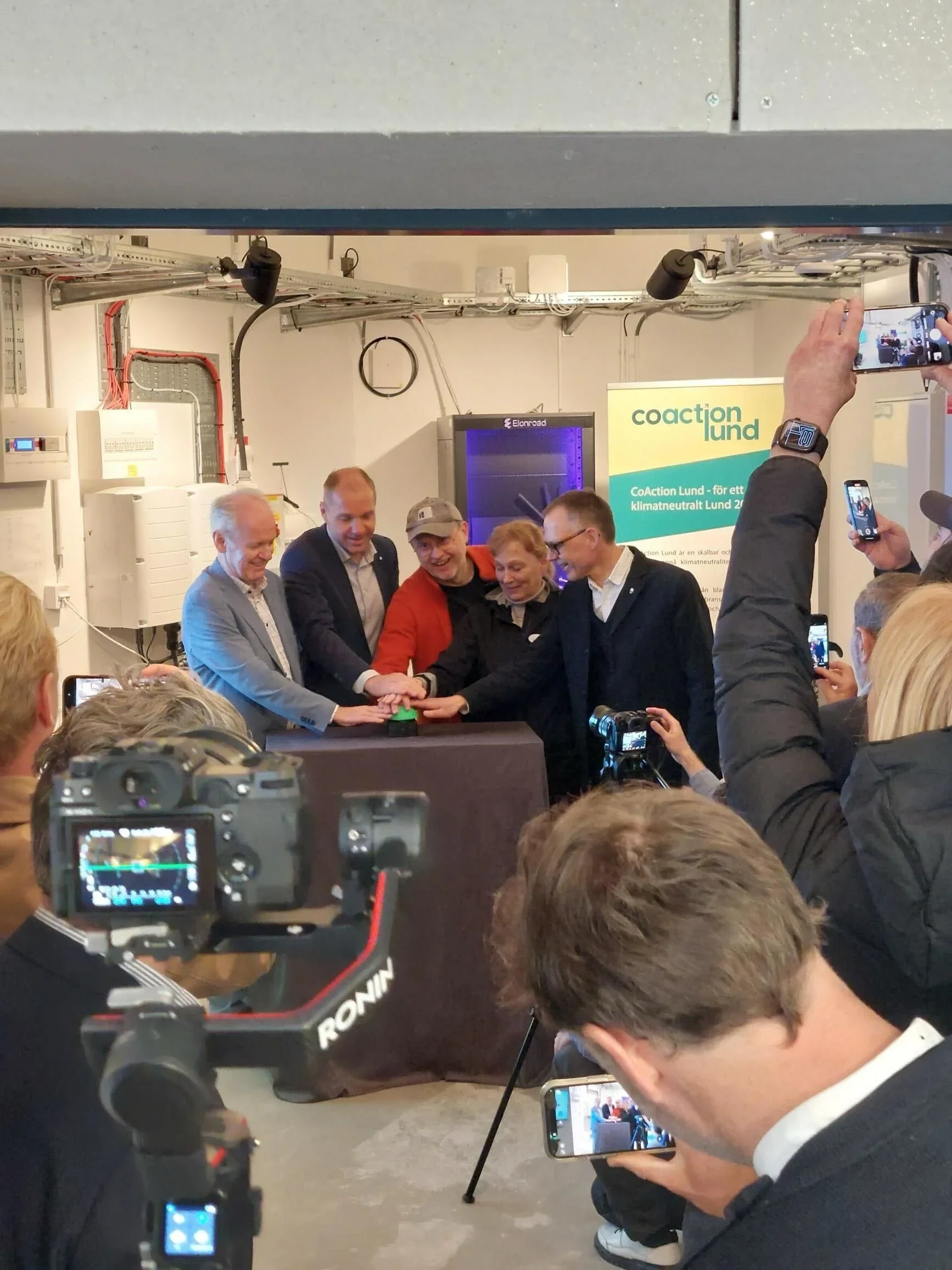
Brunnshög is the first real-world implementation of the EnergyNet concept and serves as a demonstration project within the CoAction Lund climate transition initiative. The project was launched in April 2025 and is designed to test a decentralized energy-sharing network that allows buildings to produce, store, and share electricity locally.
The Brunnshög project brings together Lund Municipality, LKF (Lunds Kommuns Fastighets AB), LKP, ViaEuropa, and other partners. It functions as a prototype energy community where solar power, batteries, and intelligent control systems are connected through the EnergyNet architecture. The goal is to demonstrate how local energy resources can be coordinated to create a more resilient and climate-friendly electricity system.
According to Lund Municipality, Brunnshög is being used to validate the technology, operational model, and lessons learned before expanding EnergyNet to larger deployments. The project has attracted attention from organizations in Sweden and abroad as an example of how future energy communities could operate.
Building on the experience from Brunnshög, EnergyNet is now being deployed at scale in the Spjället/Pottugnen residential area in western Lund. In this project, LKF is replacing approximately 280 individual electricity subscriptions with a shared internal electricity network. Construction began in February 2026, with new infrastructure being installed to connect the buildings into a common energy network. The project combines:
Solar power generation
Battery storage
Smart digital energy management
Local energy sharing between buildings
A key innovation is that locally generated electricity can be shared directly among the buildings instead of being sold to the grid and repurchased by tenants. The project also removes the traditional fixed grid fee, allowing residents to pay primarily for their actual electricity consumption.
The Pottugnen project is being carried out by LKF, together with Kraftringen and ViaEuropa, and is part of Project Energy Society (Energisamhället). It represents the first major step from a pilot demonstration to a practical deployment affecting hundreds of residents